Keep the graph
The amplifier remains a network of stages, rails, loads, coupling paths, and observable operating points.
 Greybound
Open-source greybox guitar tone experiment.
A public research base for guitar amp and pedal modeling, built around greybox thinking: analog circuits as a map, measurements as a check, and local learned laws that still report back into the circuit.
Alpha build distributed outside the App Store. macOS may ask for a manual open confirmation.
Web alpha
The web target reuses the same iced interface, canvases, controls, and layout logic as the desktop app. No parallel HTML mockup, no duplicated Greybound application.
Open playground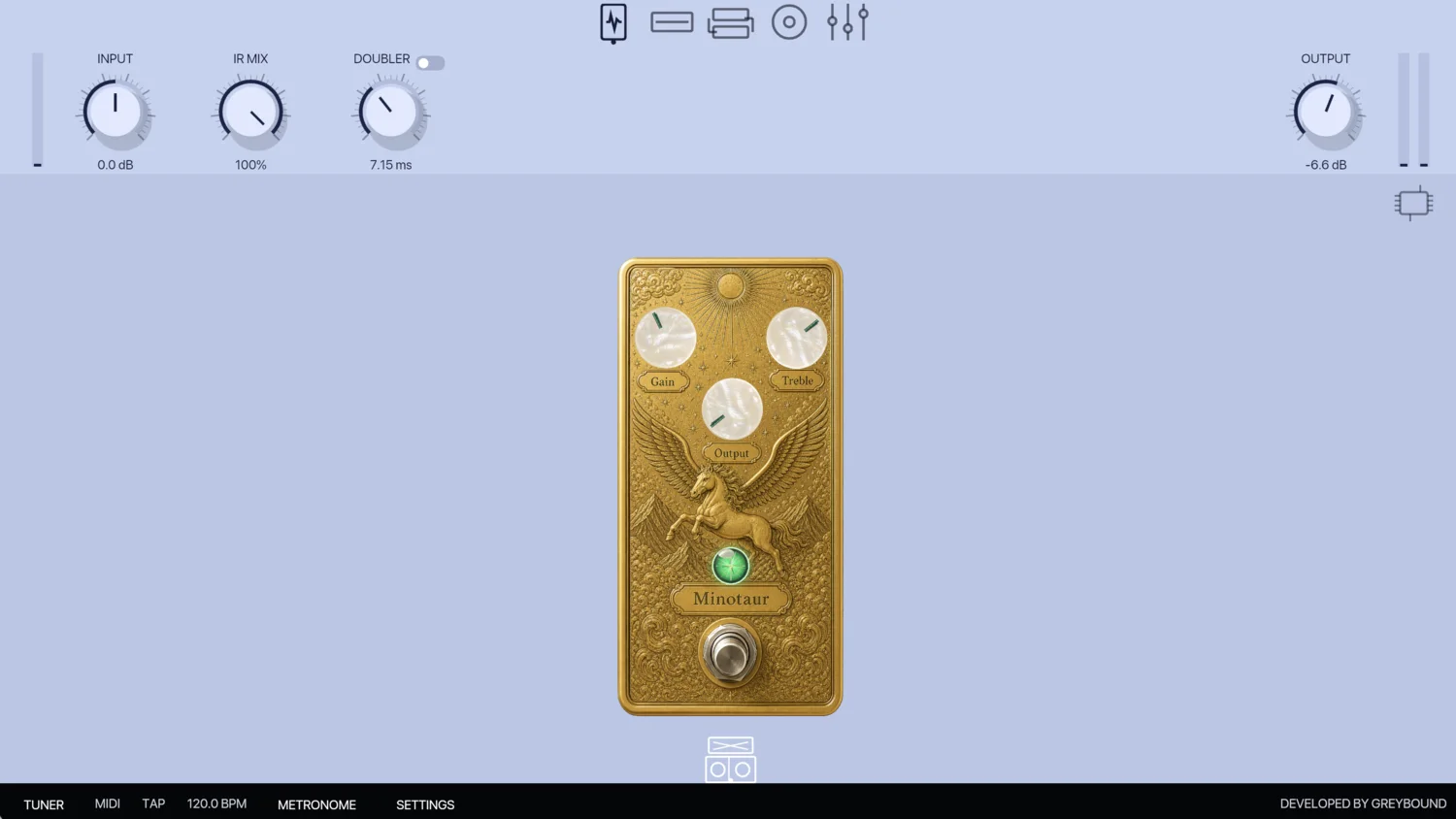 Launch the browser playground
Desktop alpha
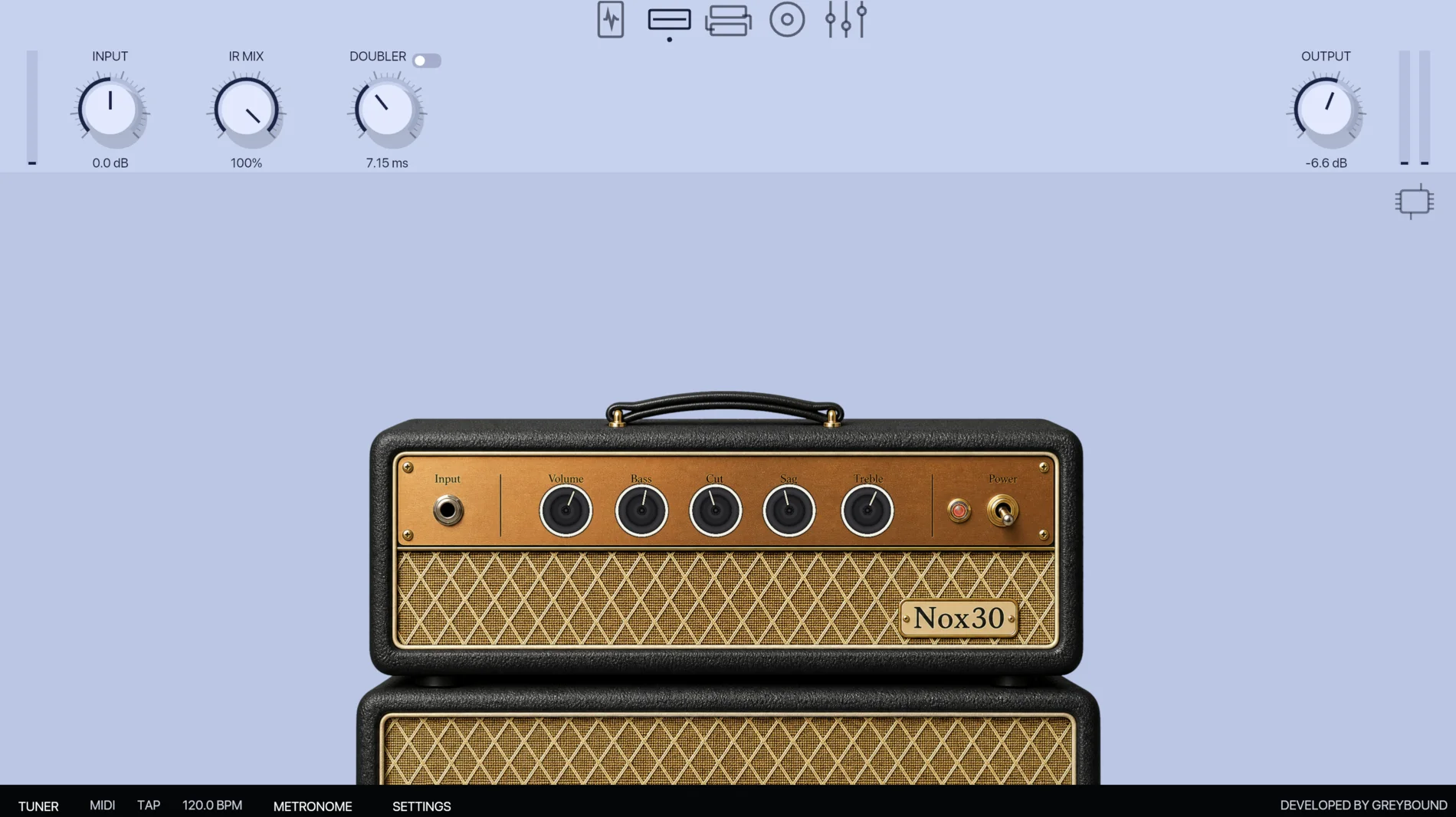
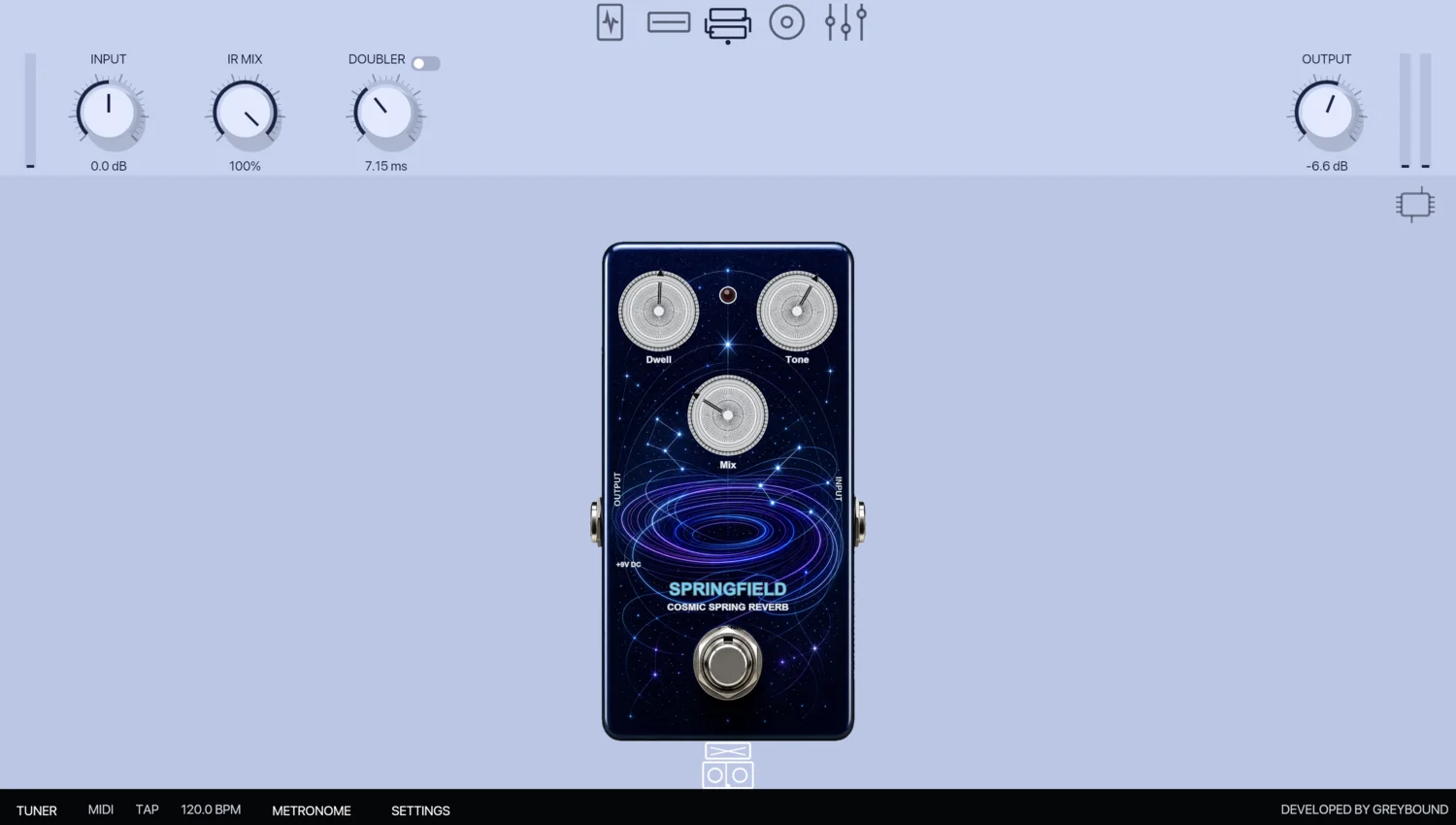
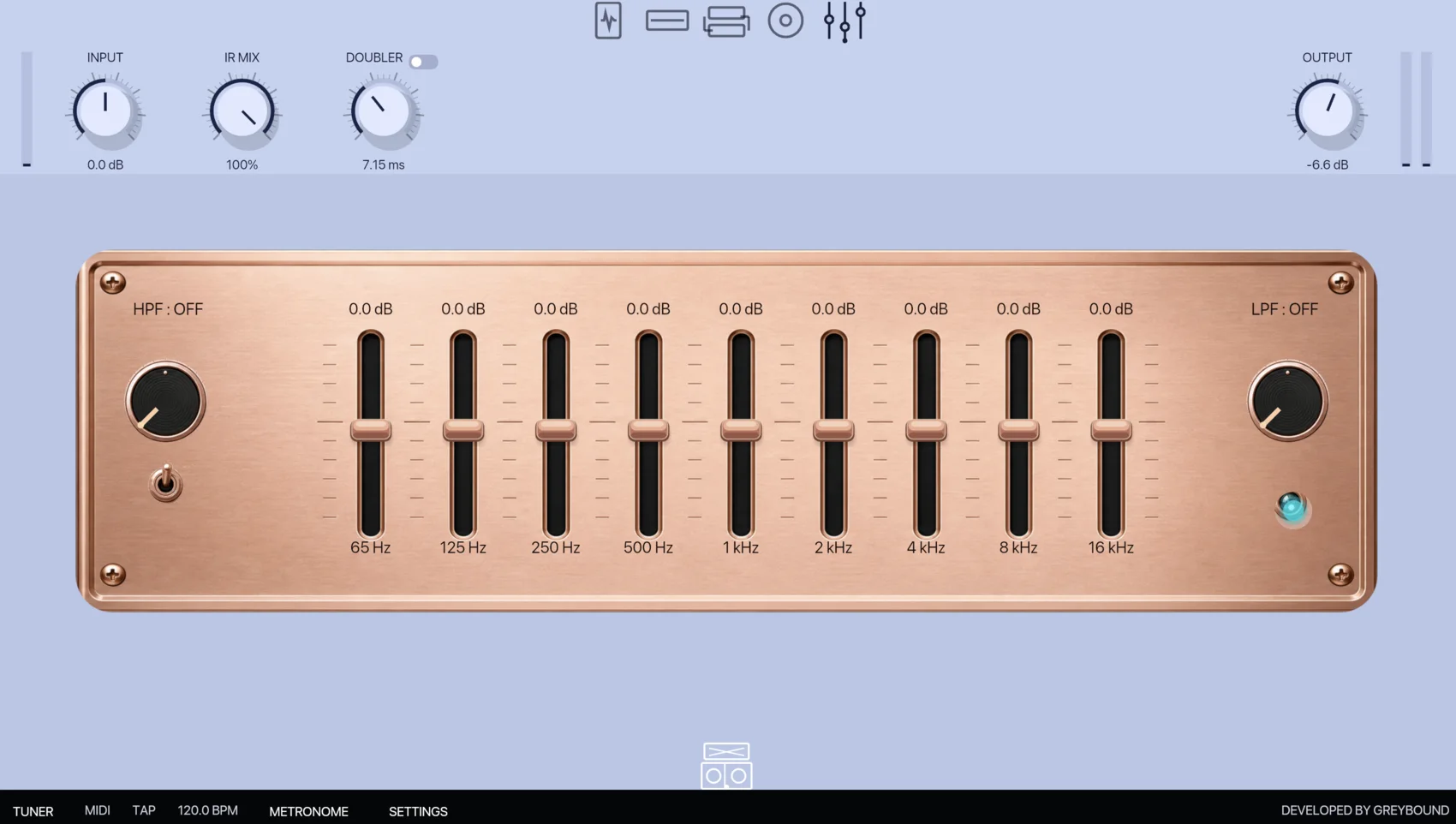
Load the macOS alpha, route live guitar or a WAV file through the current rig, and record repeatable demo passes while changing amp, pedal, cab, doubler, and EQ controls.
Why it exists
The project starts from a simple idea: guitar tone models should be understandable enough to change, measured enough to trust, and open enough for other builders to test their own instincts against the code.
Method
Greybound treats tone as a living circuit state. The graph stays readable, the nonlinearity is learned locally, and every local choice must return useful electrical state to the rest of the model.
The amplifier remains a network of stages, rails, loads, coupling paths, and observable operating points.
Tiny cells are allowed only where nonlinear behavior is too subtle for a clean equation.
The learned component reports voltage, current, bias, and headroom back into the shared circuit state.
Modeling map
Greybound lives in the middle: more inspectable than pure machine learning, more organic than a purely linearized circuit solve, and more practical than a component-perfect simulator.
Equations first
Examples first
Circuit state plus micro-nets
The subtle part
Many amp models choose one extreme: solve simplified equations and lose the messy feel, or train one large network that can only echo the sounds in its dataset. Greybound keeps the circuit as the organizing structure, then learns the small nonlinear behaviors that deserve it.
Stages do not secretly mutate each other. They exchange explicit boundary data: voltage, impedance, DC offset, headroom, coupling style, level history, and latency.
Micro neural cells are used for nonlinear components, not for memorizing an entire amplifier. A learned cell has a small job and a visible electrical contract.
Current draw updates rails, bias, and recovery behavior. Those voltage changes are reported back into the circuit so the next stage feels the same stress.
A cell can shadow the analytic path before replacing it. SPICE fixtures, held-out stimuli, render metrics, and listening notes decide whether it earns its place.
Signal chain
Greybox core
Research lab
Sound design
Research spine
Greybound keeps topology notes, model diagrams, calibration runs, render scripts, and comparison traces close to the code. The result is an experiment that can be tuned by ear and challenged by measurement.
What is inside